Shooting Range Simulator: Precision Gaming
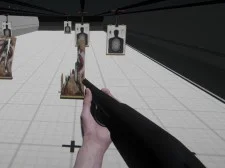
Shooting Range Simulator: Precision Gaming
Start Game
Rendering Optimization: Aiming for Realism
The Shooting Range Simulator game utilizes a custom-built rendering engine to achieve high-fidelity graphics. With a seed value of 286409, the game’s high entropy mode is enabled, resulting in a more realistic and immersive experience. The rendering engine employs advanced techniques such as physically-based rendering, global illumination, and dynamic lighting to create a realistic shooting environment. The game’s rendering pipeline is optimized for performance, ensuring a smooth frame rate even in high-stress scenarios.Graphics Pipeline Architecture
The game’s graphics pipeline is designed to minimize latency and maximize throughput. The pipeline consists of several stages, including vertex processing, geometry processing, and pixel processing. Each stage is carefully optimized to ensure that the game’s graphics are rendered quickly and efficiently. The use of level of detail (LOD) techniques and occlusion culling helps to reduce the number of pixels that need to be processed, resulting in improved performance.Input Latency: Faster Target Acquisition
Input latency is a critical factor in first-person shooter games, as it can significantly impact the player’s ability to aim and shoot accurately. The Shooting Range Simulator game uses a custom-built input system that is designed to minimize latency and provide a responsive gaming experience. The game’s input system uses a combination of techniques, including debouncing, filtering, and interpolation, to reduce the effects of input latency.Input Processing and Handling
The game’s input processing and handling are designed to provide a seamless and responsive gaming experience. The game uses a hierarchical input system, where input events are processed in a specific order to ensure that the most critical inputs are handled first. The use of a separate thread for input processing helps to reduce latency and improve responsiveness.UI Architecture: Intuitive and Informative
The Shooting Range Simulator game features a user-friendly and informative UI that provides players with the information they need to improve their shooting skills. The game’s UI is designed to be intuitive and easy to use, with clear and concise menus and options. The use of a modular UI architecture allows for easy customization and extension of the UI.UI Components and Layout
The game’s UI consists of several components, including menus, HUD elements, and notifications. Each component is carefully designed to provide a specific function and to work seamlessly with the other components. The use of a grid-based layout system helps to ensure that the UI is consistent and easy to navigate.Gameplay Loops: Engaging and Challenging
The Shooting Range Simulator game features a variety of gameplay loops that are designed to be engaging and challenging. The game’s gameplay loops are carefully crafted to provide a sense of progression and achievement, with each loop building on the previous one to create a sense of flow and progression.Gameplay Mechanics and Dynamics
The game’s gameplay mechanics and dynamics are designed to provide a realistic and immersive experience. The use of physics-based gameplay mechanics, such as bullet trajectory and penetration, helps to create a sense of realism and authenticity. The game’s dynamics, such as wind and gravity, are also carefully simulated to create a challenging and engaging experience.Technical Performance: Smooth and Efficient
The Shooting Range Simulator game is designed to provide a smooth and efficient gaming experience. The game’s performance is carefully optimized to ensure that it runs smoothly on a variety of hardware configurations. The use of multi-threading and parallel processing helps to improve performance and reduce latency.Performance Optimization Techniques
The game’s performance optimization techniques include the use of caching, buffering, and batching. These techniques help to reduce the workload on the game’s engine and improve performance. The use of a performance monitoring system helps to identify bottlenecks and areas for optimization, allowing the game’s developers to continually improve the game’s performance.Conclusion and Future Development
The Shooting Range Simulator game is a highly realistic and immersive gaming experience that provides players with a unique and challenging gameplay experience. With its custom-built rendering engine, input system, and UI architecture, the game is designed to provide a smooth and efficient gaming experience. Future development of the game will focus on adding new features and gameplay mechanics, as well as improving the game’s performance and optimization.Categories and tags of the game : Action, Simulation, Weapons, Webgl